
What does a B2B billboard campaign cost? 7 factors that decide your budget
By Hoolty ·
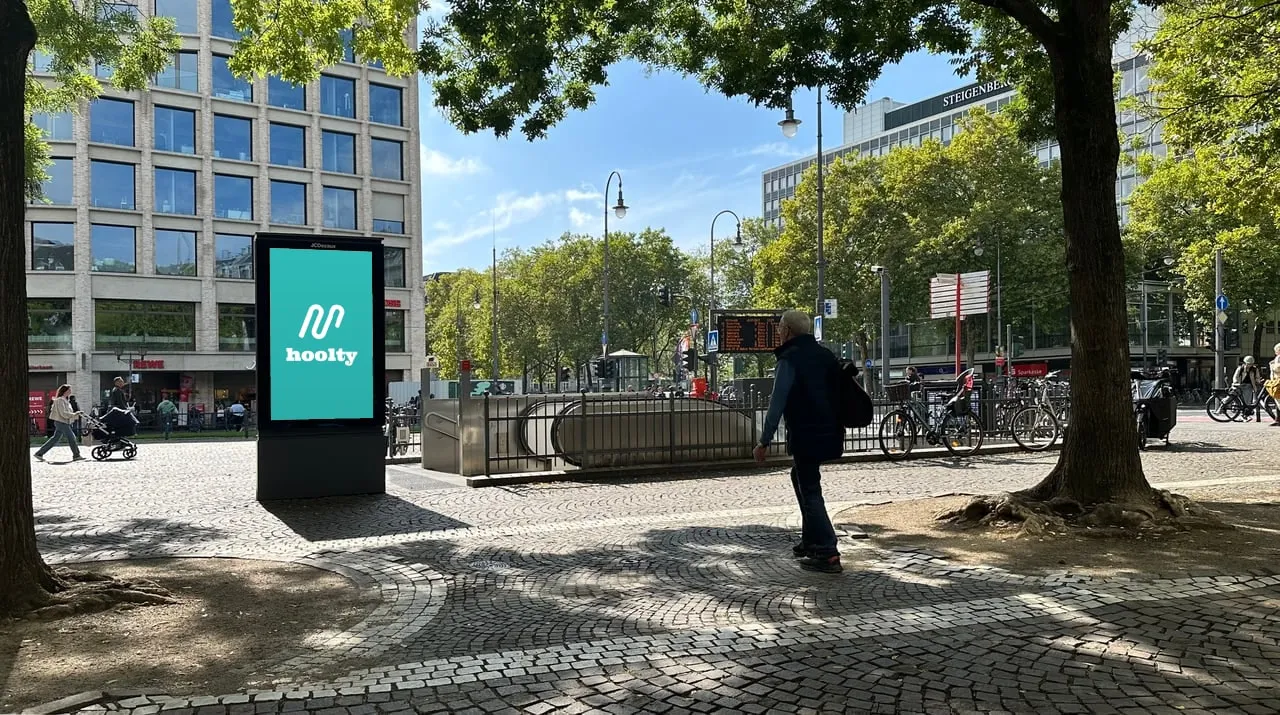
The cost of a B2B billboard campaign depends mainly on how many locations you need to reach your target accounts, which formats you use and how long the campaign runs. Because an account-based campaign only uses the few locations your accounts actually pass, it usually needs far fewer sites than a classic reach campaign. That makes the budget smaller and easier to control.
This guide covers the seven factors that drive the budget, how to keep it focused and how to tell whether the money was well spent.
Why is there no fixed price for B2B billboard campaigns?
Every campaign is built around a different account list, so every media plan is different. Out-of-home media is priced per location, format and period, and those prices vary by country, city and even by street. If a guide gives you one price for “a billboard campaign”, it’s guessing.
You’ll get a better estimate by asking which levers make a campaign bigger or smaller, and then sizing each one to your goal.
Which factors decide the cost of a B2B billboard campaign?
Seven factors make the biggest difference.
- How your target accounts are spread. When accounts cluster in one business district or along one commuter route, a few locations can reach many of them. When they’re spread across a whole country, you need more sites, or a narrower list.
- The number of locations. This is the main cost driver. Choosing locations based on where your accounts work and travel, not on overall traffic, keeps the number low.
- City and location type. Prime spots in big city centres, at major stations and at airports usually cost more than locations in smaller cities or on secondary roads. A good plan mixes both, depending on where your accounts actually are.
- The format. Classic billboards, digital out-of-home (DOOH) screens and billboard trucks are each priced in their own way. Static billboards are booked per location and period. Digital screens are often shared with other advertisers in a rotation, so you pay for a share of the screen time. A billboard truck is usually booked per day and can cover several office locations in one route.
- Duration. Longer campaigns cost more in total but build more recognition. Short, intense flights work well around a trade show or a sales push.
- Timing and demand. Locations near trade show venues and in busy seasons are in high demand and get booked early. Planning ahead gives you more choice and more room in the budget.
- Production and creative. Static billboards need printing and posting. Digital screens only need digital files, which also makes it easy to change the message during the campaign. Either way, plan time and budget for the design.
How can you keep the budget focused?
Start narrow: one city, one event or one cluster of accounts. A focused first campaign tells you more than a thin campaign spread across a whole country.
- Prioritise your account list. Start with the accounts that matter most: open deals, a new market or the visitors of one trade show.
- Pick locations by overlap. A road segment or station that people from several target accounts pass every day is worth more than a busy spot none of them use.
- Combine formats. Use billboards near office clusters, screens at the stations employees use and a truck for the offices in between.
- Time it with sales. Run the campaign while sales reaches out, so the attention turns into conversations.
The step-by-step guide on how to plan and measure a B2B billboard campaign goes deeper into choosing locations and formats.
How do you know if the budget was worth it?
Measure the campaign at account level, not by impressions. In B2B, reach doesn’t tell you much. What matters is whether the targeted accounts engage and whether pipeline moves.
- Engagement from targeted accounts, such as website visits, compared with similar accounts that weren’t targeted.
- Pipeline influence: new meetings, opportunities and deal progress among the targeted accounts.
- Direct responses via campaign URLs or QR codes.
- Sales feedback from prospects who mention the campaign.
Set these up before the campaign starts, so you can compare the result with what you spent.
What does a typical first campaign look like?
Take a software company that wants to win its 150 most important target accounts in one city. Instead of booking the whole city, it books billboards near the two business districts where most of those accounts are based, digital screens at the stations their employees use and a billboard truck for a few days to reach the remaining offices. The budget goes only to locations that reach the list, and sales follows up with the accounts that show engagement.
Frequently asked questions
Is billboard advertising too expensive for B2B companies?
Not when it’s account-based. Classic billboard campaigns buy reach across a whole city, which is costly and mostly reaches the wrong people. An account-based campaign uses only the locations your target accounts pass, so the budget stays smaller and far more relevant.
Can I start with a small budget?
Yes. Start with one city, one trade show or one cluster of accounts. A focused campaign is easier to measure and gives you a solid basis for scaling up.
Are digital screens cheaper than classic billboards?
It depends on the location, the city and how much screen time you book. Digital screens are often shared with other advertisers and need no printing, while a classic billboard shows only your message for the whole period. Choose the format that fits the location and the goal.
How do I get a price for my campaign?
Share your target account list and your goal. Hoolty recommends the locations and formats that reach those accounts and gives you a pricing indication during the first call.
Next step
Want to know what a campaign for your own account list would cost? Explore account-based offline advertising or book a call and we’ll give you a pricing indication for your accounts.